 J. Vasc. Biol. 42, Sup:2 (2005) p112
Methods: We included 404 patients undergoing a carotid endarterectomy (CEA). The plaques were freshly harvested, stained and semiquantatively analyzed for the presence of macrophages, smooth muscle cells, collagen and fat. Protein was isolated from the plaques for determination of matrix metalloproteinase (MMP) and interleukin (IL) levels. At baseline, clinical symptoms and duplex measurements were retrieved from the medical record.
Results: Clinical symptoms were categorized as follows: ipsilateral stroke (26%), transient ischemic attack (TIA;36%), amaurosis fugax (AFX;14%) or asymptomatic (NO;24%). Atheromatous, lipid rich plaques were more prevalent in patients with stroke/TIA (figure 1). Collagen staining was less evident in symptomatic patients (p<0.001). This was accompanied by a significant increase of MMP-8, MMP-9 and IL-8 concentration (p<0.001). The degree of smooth muscle cell and macrophage staining didn't differ among patient groups. Duplex stenosis showed no relation with plaque type or clinical symptoms.
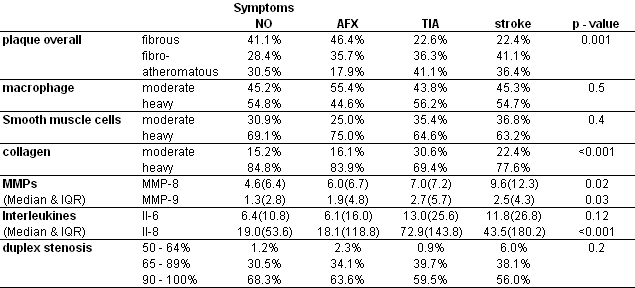
Conclusion: TIA and stroke are associated with the presence of atheromatous plaques with low collagen content and high MMP and IL-8 levels. The plaque phenotype of patients with amaurosis fugax resembles the plaque phenotype of asymptomatic patients. Further studies are required to understand why clinical presentation reflecting arterial predisposition for embolisation is associated with plaque phenotype.