 J. Vasc. Biol. 42, Sup:2 (2005) p12
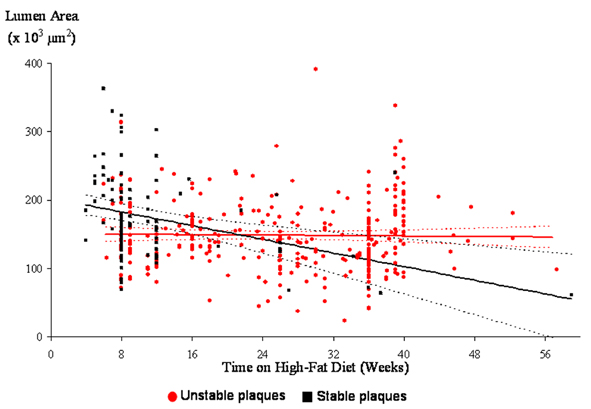
Lumen is Only Maintained When the Plaque is Unstable
The growth of atherosclerotic plaques would gradually produce critical arterial narrowing were it not for compensatory enlargement of the vessel. This serves to maintain the lumen and thus the bloodflow, but can be overwhelmed if the plaque ruptures and a large thrombus rapidly forms. Most acute coronary events are thought to be caused by this sequence of events, but it is also known that many or most plaque ruptures do not result in clinical symptoms. Furthermore, the greatest degrees of vessel expansion are seen at sites where atherosclerotic plaque ruptures have occurred. It is usually assumed that vasoactive factors released from the thrombus drive the vessel expansion, but using the fat-fed apolipoprotein E knockout mouse model of plaque rupture we have found that vessel expansion over time is the normal state of affairs in the brachiocephalic artery; that plaque formation impedes this expansion, causing loss of lumen; and that plaque rupture is permissive for vessel expansion and necessary for the maintenance of the lumen. These data, accumulated from 446 mice that underwent scheduled termination with in situ perfusion fixation at normal arterial pressure, suggest that atherosclerotic plaque rupture may be a mechanism of normal vascular homeostasis. Furthermore, they suggest the startling possibility that plaque rupture is actually the consequence of vascular expansive remodelling.