 J. Vasc. Biol. 42, Sup:2 (2005) pp8-9
Methods and Results: We performed serial intravascular ultrasound (IVUS) studies of 60 left main stems (18±9 months apart) to evaluate plaque progression in relation to serum Lp(a) and fibrinogen levels. There was a positive linear relation between annual changes in plaque plus media (P&M) cross-sectional area (CSA) versus Lp(a) (r=0.45, p<0.001) and fibrinogen (r=0.44, p<0.001), and a negative linear relation between annual changes in lumen CSA versus Lp(a) (r=-0.25, p<0.05) and fibrinogen (r=-0.28, p<0.05). Multivariate linear regression analysis showed Lp(a), but not fibrinogen was independently associated with plaque progression. Plaques in patients with Lp(a) and fibrinogen serum levels above the median (Group A, Abb 1) showed a greater annual increase in P&M CSA (p<0.01) than plaques in patients with Lp(a) or fibrinogen serum levels below the median (Group B, Abb 1) or in patients with both serum levels below the median (Group C, Abb 1). Group A&B plaques showed an annual decrease in lumen CSA, while Group C plaques had an increase in lumen CSA (p<0.02, Abb 1). During follow-up, 19 patients suffered from adverse cardiovascular events; they had higher plasma levels of Lp(a) (47.6±29.5 vs 13.6±4.6mg/dl, p<0.0001) and fibrinogen (333.6±72.3 vs 269.8±75.7mg/dl, p<0.003) than patients without adverse events.
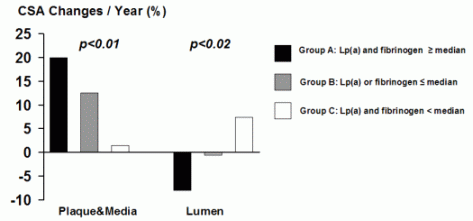
Changes in plaque&media and lumen cross-sectional area (CSA) in groups A, B and C
Conclusions: Serial IVUS showed a positive linear relation between plaque progression versus Lp(a) and fibrinogen. Patients with elevated Lp(a) and fibrinogen serum levels showed the greatest plaque progression and the highest number of cardiovascular events.